Why Sniffing Is So Important on Dog Walks
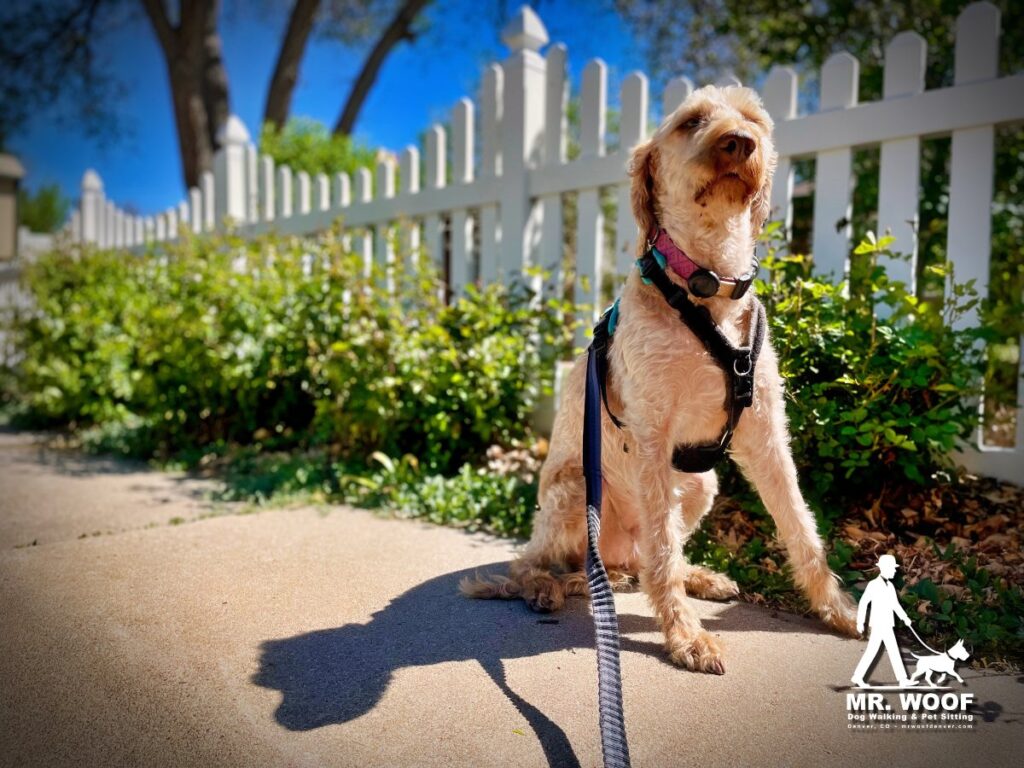
You are trying to go for a walk.
Your dog has other plans.
You make it half a block before they stop at a bush. Then a tree. Then the same bush again on the way back. You are standing there thinking, We were literally here yesterday.
Your dog is thinking, There have been developments.
That is the thing about sniffing. To us, it can look like a delay. To a dog, it is often the main event.
Walks are obviously about physical exercise, but they are also one of the biggest opportunities dogs have to explore, gather information, make choices, and engage with the world around them. And a lot of that happens through their nose.
So while I absolutely want dogs to move their bodies on a walk, I also want them to have time to stop and investigate.
Sniffing Is How Dogs Read the World
Dogs experience their environment very differently than we do.
We look around.
They smell around.
A patch of grass, a fire hydrant, a fence post, or the base of a tree can contain layers of information that are completely invisible to us.
Who has been there?
How recently?
Is it a familiar dog?
A new dog?
A rabbit?
A squirrel?
A neighborhood cat who apparently runs a very active underground operation?
To us, it may just be a tree.
To your dog, it may be the neighborhood bulletin board.
That is why the same spots can be interesting day after day. The location may be the same, but the information is not.
A Slow Walk Can Still Be a Good Walk
One of the easiest mistakes to make is assuming that a better walk means more distance.
More blocks, more miles, more movement.
And sometimes, yes, a dog needs to stretch their legs and burn some energy.
But distance is only one measure of what a dog gets from a walk.
Research backs that up. In one study published in Applied Animal Behaviour Science , dogs that practiced nosework for two weeks showed a more positive judgment bias than dogs spending the same period practicing heelwork. In other words, the scent-focused activity appeared to have a measurable positive effect on the dogs’ emotional state.
That does not mean ten minutes of sniffing somehow equals a two-mile walk. There is no good scientific formula that converts nose time into mileage.
It does mean that a walk can be valuable for reasons that never show up on a step counter.
A dog who spends 25 minutes moving comfortably, sniffing, checking out the neighborhood, and engaging with their surroundings may get something very different from that walk than a dog who marches twice as far without much opportunity to explore.
Different does not mean worse.
That is especially true for dogs who are older, anxious, reactive, easily overstimulated, or simply more interested in exploring than setting a neighborhood land-speed record.
The goal is not to drag every dog through the same route at the same pace.
The goal is to give the dog in front of you a good walk.
Sniffing Is Mental Exercise
Physical exercise works the body.
Sniffing gives the brain something to do.
When a dog is actively smelling and processing information, they are concentrating, following scent, making choices, and engaging with their environment.
Scent-based activities are increasingly being studied as a form of canine enrichment, and research has found positive behavioral effects associated with nosework and olfactory exploration.
That is why I am not especially impressed by mileage for mileage’s sake.
You may come home thinking, We barely went anywhere.
Your dog may come home thinking, I have reviewed the entire neighborhood.
Both things can be true.
Sniffing Can Help Dogs Decompress
For some dogs, walks are exciting. For others, they can be a lot to take in.
Cars. Bikes. Other dogs. Construction. People. Delivery trucks. Trash cans that were apparently not there yesterday and therefore require a formal investigation.
Allowing a dog time to sniff can help the walk feel less rushed and give them something familiar and instinctive to focus on.
This can be especially useful for dogs who are anxious, shy, newly adopted, or easily overwhelmed.
It is not a magic fix for fear or reactivity, and every dog is different. But giving a dog time to move at a comfortable pace and explore the environment can make walks feel less pressured.
Sometimes slowing down is the productive thing.
Senior Dogs Can Get a Lot From Sniffing
Senior dogs are a great example of why distance is not the only way to measure a walk.
As dogs age, they may slow down.
They may not want to walk as far and may need more breaks along the way.
Their joints may be stiffer, their stamina may be lower, or they may simply be very content moving through the world at a more deliberate pace.
That does not mean the walk stops being valuable.
A shorter walk with plenty of sniffing can still provide mental stimulation, fresh air, movement, and a chance to engage with the neighborhood.
For some senior dogs, that may be exactly the right kind of outing.
The walk changes with the dog.
That is not a downgrade.
Sniffing Can Help Build Confidence
Some dogs are naturally bold.
Others want to inspect the terms and conditions before proceeding.
For shy or uncertain dogs, being allowed to explore at their own pace can help them feel more in control of the walk.
That may mean stopping to investigate a new object.
It may mean hanging back for a moment.
It may mean sniffing the ground before moving forward.
When a dog is not constantly being rushed along, they have more opportunity to process what is around them.
That can help some dogs become more comfortable with the environment over time.
Again, there is no universal formula.
But choice matters.
What I Look for on a Sniff Walk
I am not just watching how far we go.
I am watching the dog.
- Are they moving willingly?
- Do they seem relaxed?
- Are they curious?
- Are they checking in with me?
- Are they avoiding something?
- Are they suddenly tense?
- Are they sniffing normally, or becoming overly fixated?
- Is their pace changing because they are tired, hot, nervous, or just deeply interested in whatever happened beside that mailbox?
Those details matter.
A good walk is not just about completing a route.
It is about paying attention to how the dog is experiencing it.
That is one of the reasons I like private walks so much. I can adjust the pace, route, distance, and amount of sniffing based on the individual dog instead of asking them to fit into a group schedule.
Some dogs want to move, others want to investigate, and most want a little of both.
A walk is not a race.
It is time outside to move, explore, and gather information.
And yes, occasionally time to spend an unreasonable amount of time investigating one particular shrub.
If the dog is safe, comfortable, engaged, and enjoying the walk, I am not worried about whether we covered one more block.
Frequently Asked Questions
A few quick answers about sniffing, exercise, and what makes a good dog walk.
Is it good to let my dog sniff on walks?
Yes. Sniffing is a normal and important part of how dogs explore their environment. Allowing time to sniff can provide mental stimulation and make walks more engaging.
How long should I let my dog sniff?
There is no exact rule. Give your dog enough time to investigate without letting every stop completely take over the walk. Safety, weather, traffic, and your dog’s behavior should always guide the decision.
Does sniffing tire dogs out?
It can. Sniffing requires concentration and mental processing, so a walk with plenty of scent exploration can be more tiring than the distance alone might suggest.
Is a sniff walk enough exercise?
It depends on the dog. Some dogs need more physical exercise in addition to sniffing, while senior dogs, anxious dogs, or lower-energy dogs may get plenty of benefit from a slower, sniff-heavy walk.
Why does my dog sniff the same places every day?
Because the information changes. The tree may be the same, but different animals, people, weather, and scents can make it interesting all over again.
Should I let my dog sniff everything?
No. Some things are unsafe or simply not worth investigating. Broken glass, trash, unknown food, wildlife, chemicals, and areas near traffic are good reasons to keep moving.
A Good Walk Is About More Than Distance
Dogs do not experience a walk the same way we do.
We may notice the weather, the route, or how many blocks we covered.
They notice who passed through, what changed, what smells familiar, and what absolutely requires a second inspection.
That is part of the experience.
So yes, I want dogs to move.
I want them to get exercise.
I want them to stretch their legs and enjoy being outside.
But I also want them to have time to be dogs.
And sometimes that means standing beside a tree for a minute while they catch up on the neighborhood news.